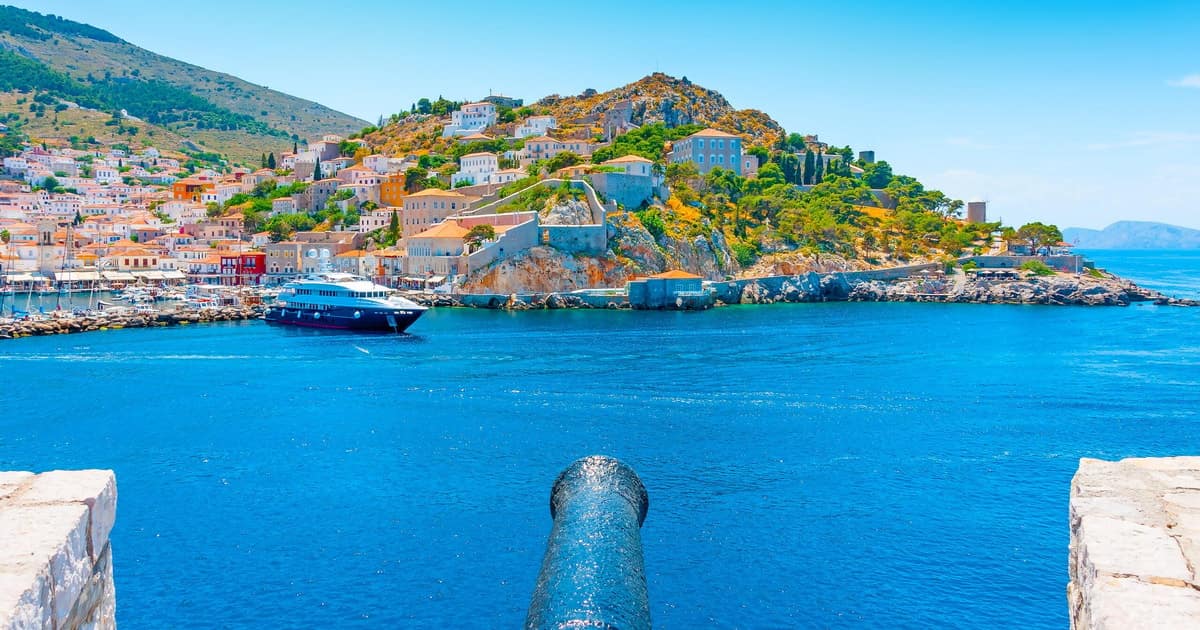
A Hydra day trip from Athens is a one-day trip from Athens to the Saronic island of Hydra, by cruise or by ferry, and GetYourGuide sells the tickets. Our Greece tours page covers the rest of the country.
This page shows the Hydra day trip from Athens tickets by length and labels. It then covers Hydra, Hydra Town, the car-free streets, beaches, mansions, monasteries, the Saronic Islands, the ferry, the weather, the food and how to book.
Table of contents
What Is A Hydra Day Trip From Athens?
A Hydra day trip from Athens is a one-day journey to the island of Hydra, one of the Saronic Islands. One type is a cruise that also stops at Poros and Aegina; the other goes to Hydra alone. This page lists 60 Saronic Islands tickets, and you pick the type that fits your day.
Counting by title, 24 tickets name Hydra. Of these, 21 do not name Nafplio. The other 3 name Nafplio, and 5 tickets on the page name it in all. The cruises that join Hydra, Poros and Aegina in one title number 7.
The page also holds other Saronic Islands tickets that name a different island. Aegina appears in 30 titles and Poros in 15. Both islands also sit in the 7 three-island cruises, so one cruise counts for Hydra, Aegina and Poros. That overlap is why the island counts add up to more than the ticket total.
Spetses appears in 6 titles and Agistri in 9. Ferry tickets account for 7 listings. Choose from these when you want a different island instead of a Hydra day trip from Athens. Check the island names in each title before you open a page.
The rest of this page covers the tickets themselves. You get the page texts, the length of each trip and the labels it carries. Then come the stops on the cruises, followed by Hydra, Hydra Town and the car-free streets. Each topic has its own heading.
Beaches, mansions and monasteries follow, then the Saronic Islands, Aegina and Poros. The last topics are the ferry from Athens, the weather, the food and how to book. Read them in order to plan a Hydra day trip from Athens, or jump to the one you need.
What Do The Hydra Day Trip From Athens Tickets Include?
Five ticket pages show what a Hydra day trip from Athens includes. Two are cruises, two are ferry trips and one is a guided walking tour on the island. Page texts and highlight lines name meals, live music, guided walks, swimming and free time.
First comes a 12-hour cruise from Athens to Hydra, Poros and Aegina. Its page text names views of the Greek coast from the open deck and a buffet lunch on board. Highlights add free time on each island, an optional audio guide and exploring Hydra by saddled donkey.
The second Hydra day trip from Athens listed here is also a 12-hour cruise to Hydra, Poros and Aegina. Lunch and live music appear in its page text, and a highlight describes the lunch as a buffet on board. Cobblestone streets and historic homes on Hydra are named in another highlight, along with local life.
Piraeus is the starting port of the third ticket, a 10-hour high-speed ferry trip to Hydra. It adds a one-hour guided walk in Hydra Town and six full hours on Hydra. A swim at Spilia or a visit to Vlychos Beach is named, with optional transfers and sunbeds. Almond sweets called amygdalota are on the list too.
A 9-hour independent trip with ferry tickets included is the fourth ticket, a Hydra day trip from Athens. According to the page text, you catch a ferry to Hydra, an island in the Aegean Sea. Free time on the island follows, to explore and discover it. No other island appears in its page text.
On Hydra itself, the fifth ticket is a guided walking tour of 90 minutes, centred on the island’s sailing history. The page text says you learn about the island’s role in Greece’s struggle for independence. A digital virtual tour of the harbour is part of the description.
Open each of the five ticket pages before you choose a Hydra day trip from Athens. Look at the exact wording of every line on food, walking, swimming and transfers. The cruises, the ferry trips and the walk word their extras differently. Note which items a page calls optional and which it states plainly.
How Long Is A Hydra Day Trip From Athens?
Hydra day trip from Athens tickets run from 1h 15m to 13 hours. That range covers the 21 Hydra titles that do not name Nafplio and show a length in hours or minutes. The longest of them is a private day tour of Hydra and Poros.
Across the whole page, 11 tickets show 10 hours and 7 show 3 hours. Six tickets show 12 hours, 5 show 9 hours and 4 show 8 hours. Two tickets show 11 hours and two show 7 hours. Two tickets show 1 day, and one shows 2 days, one shows 1 – 9 hours and one shows no length.
The shortest Hydra day trip from Athens ticket is the ferry-only one for Athens and Hydra, at 1h 15m. Two tickets on the page show that length. Three lengths on the page are shorter: 10 minutes, 40 minutes and 70 minutes, one ticket each. The page also lists 1h 30m once, 100 minutes twice and 2.5 hours once.
A notice label shows the latest booking time before the start. The 10h label sits on 27 tickets, 30min on 11 and 1h on 5. The labels 9h, 4h and 15min sit on 3 tickets each. One ticket each carries 8h, 3h, 6h, 2h or 20min. Three tickets show no notice label.
Open the ticket page of the Hydra day trip from Athens you pick. Check the notice label and the length there, because both change from one ticket to the next. Put the two figures for each ticket side by side when you compare tickets.
A length is the ticket length, not a sailing time, so do not read it as hours on the water. Compare it with the hours you have free on the day. Then confirm that the notice label leaves enough time before the start.
Which Labels Do The Hydra Day Trip From Athens Tickets Carry?
Free cancellation is the label on 56 of the 60 tickets on this page, so 4 tickets lack it. The private Hydra day trip from Athens in the list carries the label. The ferry-only ticket between Athens and Hydra is one of those 4.
The pickup available label sits on 31 tickets, and the private day trip to Hydra is one of them. The ferry-only ticket for Athens and Hydra shows no pickup label. The label reads pickup available and carries no detail beyond those words. Treat it as a tag, not a full description.
The small group label appears on 16 tickets, and a private option or private group label appears on 20. A Hydra day trip from Athens can carry both kinds. The private day trip to Hydra shows private group and small group together. So the two counts overlap.
The skip the line label shows on 13 tickets on the page. The wheelchair accessible label shows on 5. The ferry-only ticket between Athens and Hydra carries both. Neither label appears on the private day trip to Hydra. Read both as plain tags and not as full rules.
Each label appears on the ticket page, so check it against your chosen date. The labels of one Hydra day trip from Athens ticket do not carry over to the next ticket. Look at each ticket on its own, even when two tickets look alike.
Decide which labels matter to your group before you compare tickets. Then go through the Hydra day trip from Athens tickets one by one and note which labels each one shows. Drop a ticket that lacks a label you need. Keep the rest on a short list for the final check.
Which Stops Do Hydra Day Trip From Athens Tickets Name?
The tickets name Hydra, Aegina, Poros, Spetses and Agistri. Hydra sits in the title of 24 of the 60 tickets. Seven of the 60 are cruises that name Hydra, Poros and Aegina together. Scan each Hydra day trip from Athens ticket for these island names before you compare anything else.
Aegina is in the title of 30 tickets, and 15 tickets name Poros. Agistri turns up on 9 tickets and Spetses on 6. These counts put four more island names beside Hydra. Pick the tickets whose island names match the places on your wish list.
Seven titles carry the word ferry, 20 carry the word cruise and 11 carry the word private. The word cruise appears in more titles than ferry and private put together. These words sort the Hydra day trip from Athens list by ticket type. Pick a type first, then read the island names inside that group.
Swimming or snorkelling appears on 26 tickets, and a lunch or a meal appears on 21 tickets. These are extras that tickets mention, so they are not stops. A count shows only that the ticket text names the extra. If one of them matters to you, look for it there before you decide.
Walking, hiking, museum and temple tours account for 11 tickets. A donkey is named on 2 tickets, a smaller count than swimming, lunch or the 11 tours. Search the ticket text for those words. Do this when a walk, a museum or a donkey matters for your Hydra day trip from Athens.
Four of the 60 tickets start in Nafplio, not in Athens, and a fifth is a tour from Hydra to Nafplio. A different starting city does not fit a plan that begins in Athens. Look at the starting city in each ticket before you add it to your shortlist.
Compare the stop list of each ticket with your own plan. A Hydra day trip from Athens suits you when the ticket names your islands and your extras. It must also start in a city you can reach. Write your list down and tick it off, ticket by ticket.
What Is Hydra?
Hydra is a Greek island and one of the Saronic Islands, an archipelago named after the Saronic Gulf. Its name comes from the Greek word for water and refers to the natural springs on the island. Spellings such as Ydra and Idra also exist, and the pronunciation is EE-thra.
Hydra and the small island of Dokos lie off the northeast tip of the Peloponnese. A narrow strip of water separates Hydra from the Peloponnese. Wikipedia adds that both islands are sometimes counted as part of the Saronic Islands. The Saronic Islands lie in the Saronic Gulf, in the Aegean Sea southwest of Athens.
The island in a Hydra day trip from Athens has bare rocky hillsides and valleys where pine trees grow. These two features dominate the landscape. The valleys also hold the occasional farmhouse. Picture rock on the hillsides and pine trees in the valleys.
The island has one main town, Hydra Town, known simply as Hydra port. Hydra is part of the Islands regional unit of the Attica region. Attica and the Peloponnese are its nearest mainland regions. Wikivoyage calls Hydra a well-developed resort island whose old harbour has been preserved.
Cypress and olive trees grow beside the pines on the island of a Hydra day trip from Athens. Cyclamen and poppies are among its wildflowers. In the wider Mediterranean Basin, pines grow, and garrigue or maquis forms the plant cover of Mediterranean climates in Europe. These lines describe the wider region, not Hydra.
Rabbits, feral cats and goats are among the island’s mammals. Quails and migratory birds are among its birds. Dokos, the small island next to Hydra, is rocky. Agistri, another Saronic island, is a small pine-clad island. The smaller Saronic islets can carry a villa or a church, or just sheep and scrub.
Plan your footwear around the landscape of the island. Flat shoes with a firm sole suit bare rocky hillsides better than sandals do. Wear them on your Hydra day trip from Athens, and carry only what you need for the day. One island and one clear plan keep the day simple.
What Is Hydra Town?
Hydra Town is the main town of the island, and it is the island’s port as well. The island has one main town, which people know simply as Hydra port. The old harbour at its centre has been preserved, and the town is built around it.
Restaurants, shops, markets and galleries are centred on the crescent-shaped harbour. They cater to tourists and to locals, who are called Hydriots. Cafes on the harbour serve ouzo, other drinks and coffee. Start at the water on a Hydra day trip from Athens, because the shops and cafes cluster around it.
The harbour is deep, and whitewashed houses rise on the hills on both sides. Steep stone streets lead up and outward from the harbour. The island’s hotels and the greater part of the local homes stand on these streets. A place to stay can be reachable only by climbing stairs. Hydra has no high-rise houses.
The mansions of the sea captains ring the harbour and show the prosperity that shipping brought to the island. Scan the waterfront for these mansions on a Hydra day trip from Athens.
Besides the port, the island has other villages and hamlets: Mandraki, Kamini, Vlychos, Palamidas, Episkopi and Molos. Find these six names on a map before you go, so they feel familiar on the day.
Almost everything of interest to a visitor lies in three places. Two of them are the waterfront and the main streets behind the harbour. The third is the main road that follows the coast, plus the land within a block or two of it. Plan a Hydra day trip from Athens around those three places.
One ticket for a Hydra day trip from Athens runs 10 hours and comes with swimming. Its highlights name a one-hour guided walk of Hydra Town. Check the same ticket for your time in town, since the walk fills one hour of the day.
Why Are There No Cars On Hydra?
Hydra has no cars because the law does not allow cars or motorcycles on the island. Service trucks are the exception to that rule. The ban forms part of an environmentally friendly transportation policy. Expect streets without car traffic on a Hydra day trip from Athens.
Walking is the main way to get round Hydra, because the inhabited area is compact. You can cross the town centre on foot. For going farther, donkeys and water taxis provide public transport. Wikipedia says mules and horses provide public transport as well.
Donkeys and water taxis both gather at the centre of the port. The water taxis are on one side of the port, and the donkeys are on the other. Look for them there on a Hydra day trip from Athens. Donkeys leave droppings on the streets, so watch your step.
Of the 60 tickets on this page, 2 name a donkey in the highlights. One is a 12-hour cruise ticket that lists exploring Hydra by saddled donkey, the island’s traditional transport. A 10-hour private ticket for a Hydra day trip from Athens calls Hydra a car-free island. Ask what that donkey line covers before you book.
A donkey is a domesticated equine that derives from the African wild ass. People have used it mainly as a working animal since it was domesticated. Donkeys serve principally as pack animals or for draught work in transport and agriculture. The call of a donkey is a bray. None of this describes the donkeys of Hydra itself.
A mule is the offspring of a male donkey, called a jack, and a female horse, called a mare. Mules inherit sure-footedness, toughness and endurance from donkeys, and speed and agility from horses. They are more patient, hardier and longer-lived than horses. People use mules as pack animals, and mule trains deliver food to remote areas.
Wear flat shoes on a Hydra day trip from Athens, because you cover the ground on foot. Allow time for each walk, since no car or motorcycle can shorten it. Pack light for a day spent on foot, and keep your hands free.
Where Can You Swim On Hydra?
Wikivoyage names two swimming places near Hydra Town: Spilia and Vlychos. The island has plenty of smooth rocks and pebbly bays for sunbathers. Decide which of the two you want before you pack for the Hydra day trip from Athens.
Spilia is a rocky shore on the west edge of town. You reach it by walking west along the main coastal road. Because the walk comes before the swim, keep your swimsuit, towel and water in a small day bag.
Spilia is not really a beach. It is a rocky area with stairs and level places in the rocks that suit sunbathing. Swimmers climb in and out of the water by ladders set in the sea wall. Wear shoes with a grip for the stairs and ladders on a Hydra day trip from Athens.
Vlychos is a pebble beach west of Spilia. Two tavernas stand close to it. Vlychos is also a small village on the island, so the name covers the shore and the settlement. Bring a towel or a mat for the pebbles.
Spilia sits in the Kamini district. Kamini is the neighbouring village, found past a little headland west of the port. It is a settlement with a small fishing harbour. On a Hydra day trip from Athens, ask for Spilia or Kamini when you need directions.
Snorkelling is swimming face-down while you breathe air through a shaped tube called a snorkel. A mask creates an airspace, so you can see underwater. Swimfins give more efficient propulsion, because human feet are too small and badly shaped to give much thrust. Scuba diving needs more equipment and training than snorkelling.
Of the 60 tickets on offer, 26 name swimming or snorkelling. One 10-hour ticket lists a swim at Spilia or a visit to Vlychos Beach, with optional transfers and sunbeds. Another is a 4-hour private snorkelling and swimming boat trip around Hydra. Pick your swim first when you plan the Hydra day trip from Athens.
Which Mansions And Museums Stand On Hydra?
The mansions of Lazaros and George Kountouriotis, Boudouris, Kriezis, Voulgaris, Sachinis and Miaoulis stand on Hydra. All of them hold collections of island furniture. Museums include the Hydra Museum, the small museum inside the cathedral and a branch of the National Museum of History.
Lazaros Kountouriotis was a major figure of the Greek War of Independence. His descendants donated his mansion to the Historic-Ethnologic Institute of Greece. The mansion now operates as an extension branch of the National Museum of History. Look up that branch for details before a Hydra day trip from Athens.
The Tsamados family donated their mansion to host the Greek Maritime Academy. The mansion is now a Maritime Academy. The church received a house built for the Tsamados family on the hill above the port. It was meant as a weaving school for textiles and carpets and became known as the Old Carpet Factory.
The Hydra Museum stands next to the ferry dock and covers the seafaring ways of the Hydriots. Its exhibits include the embalmed heart of Admiral Andreas Miaoulis. A small museum inside the cathedral displays historical religious objects, textiles and bejeweled vestments. Add both museums to your plan for a Hydra day trip from Athens.
Infertile ground sent the people of Hydra to the sea, and larger boats made the island an important commercial port. Hydriot vessels carried goods between southern Russia and the Italian ports of Ancona and Livorno. Georgios Sachtouris, Emmanouil Tombazis and Laskarina Bouboulina were each a shipowner and an admiral.
At first, Hydriots were far from unanimous about joining the Greek War of Independence. Hydra then joined, and its fleet, with those of Psara and Spetses, won control of the eastern Aegean Sea. Miaoulis used Hydriot fire ships to inflict heavy losses on the Ottoman fleet. Look for the name Miaoulis on a Hydra day trip from Athens.
A 90-minute guided walking tour of Hydra covers the island’s maritime heritage and its role in Greece’s struggle for independence. The page text adds a digital virtual tour of the harbour, and the label list shows free cancellation. Choose this ticket for your Hydra day trip from Athens if the sailing history interests you.
Which Monasteries And Churches Stand On Hydra?
Hydra has churches and six Orthodox monasteries. The sources name three buildings: Profitis Ilias, Ayia Efpraxia and the island’s cathedral. The cathedral is the old Monastery of the Dormition of the Virgin, in the town. Have these three names ready before you book a Hydra day trip from Athens. Read up on each one before you go.
Profitis Ilias and Ayia Efpraxia are the two monasteries that the sources call noteworthy. Both stand on one hill, and that hill overlooks the main harbour. No page gives the names of the other four monasteries. Profitis Ilias also appears as Prophet Elias, so try both spellings when you search for photos, maps or ticket pages.
The cathedral contains the tomb of Lazaros Kountouriotis. Wikivoyage says to spot the belltower when you look for the building. Learn what that tower looks like before a Hydra day trip from Athens. A photo of the cathedral saved before you leave helps you recognise it as soon as you reach the island.
The cathedral’s interior has hundreds of gold and silver icons and other elaborate Orthodox decoration. Churches and monasteries are sprinkled across the Saronic Gulf Islands, and the buildings include ancient and modern ones. Hydra’s own churches come without names or a number in the sources, so only three buildings carry names.
Your ticket page states how much free time you have on the island. Read that line first when you plan a Hydra day trip from Athens. Then choose between the two hill monasteries and the cathedral in the town. Write the three names on your phone, so the choice is ready the moment you arrive.
What Are The Saronic Islands?
The Saronic Islands are a group of islands in Greece, named after the Saronic Gulf in which they lie. They sit just off the Greek mainland. The group has a second name, the Argo-Saronic Islands. Use either name when you search maps or books for a Hydra day trip from Athens.
Salamis, Aegina, Agistri and Poros are the main inhabited islands of the group. The gulf lies between the peninsulas of Attica and Argolis and forms part of the Aegean Sea. Argolis lies in the east of the Peloponnese. The Athens urban area sits on the north coast of the gulf, and the group lies southwest of Athens.
Spetses carried the ancient name Pityussa, which describes a forested island full of pine trees. Administratively it belongs to Attica, but its closeness to the Peloponnese mainland puts it geographically in Argolis. The municipality also includes three uninhabited islands: Spetsopoula, Falkonera and Velopoula. Water taxis connect Spetses Town with the Peloponnese coast.
The Peloponnese is a peninsula in southern Greece, linked to the central part by the Isthmus of Corinth. That land bridge separates the Gulf of Corinth from the Saronic Gulf. The island behind any Hydra day trip from Athens lies off the northeast tip of the Peloponnese, beside Dokos. Both are sometimes counted in the group.
Agistri is a small populated island and municipality in the Saronic Gulf. It is a pine-covered island in the Saronic Islands group. The gulf also holds Aegina, Salamis and Poros, along with the smaller islands of Patroklos and Fleves. Pick out these names on the map before you shortlist a Hydra day trip from Athens.
On this page, 30 Saronic Islands ticket titles name Aegina, 15 name Poros, 9 name Agistri and 6 name Spetses. Check the island names in each title before you click, so the ticket matches the place you want.
The islands belong to the Greek administration of Attica. The gulf is the eastern end of the Corinth Canal, which cuts across the isthmus of Corinth. Hold the gulf, Attica and the Peloponnese in mind as you weigh each Hydra day trip from Athens.
What Are Aegina And Poros?
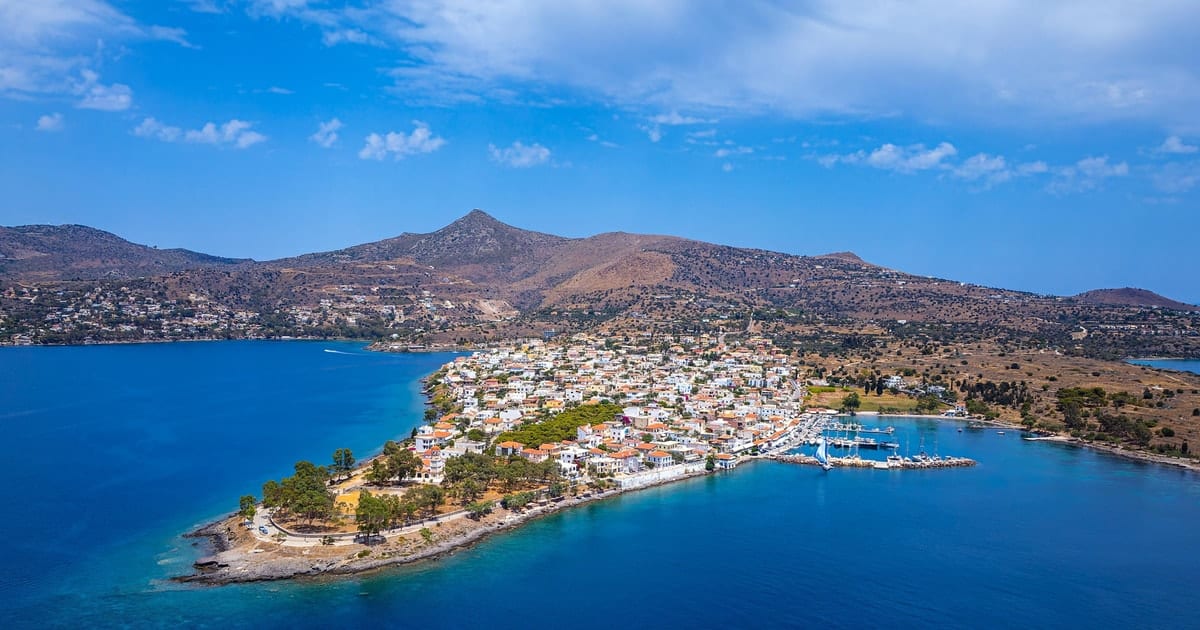
Aegina and Poros are two Saronic islands of Greece, and both lie in the Saronic Gulf. Aegina is roughly triangular, and an extinct volcano makes up two-thirds of it. Poros is a small island pair in the southern part of that gulf. Each island has its own main town.
The town of Aegina is the regional capital and the ferry port. It sits at the northwestern end of the island. A Hydra day trip from Athens is a separate ticket from every Aegina ticket. Read the island name in each title before you book.
Aegina is known for the temple of Aphaea, pistachio production and the pilgrimage site of Saint Nektarios. The temple was dedicated to a goddess who was later associated with Athena. The temple itself is a Doric shell on a ridge of pine trees. Agia Marina, a small harbour on the east coast, lies near the temple.
Paliachora is an abandoned city that was the main settlement on the island in Byzantine and Venetian times. The page text of one Aegina day trip names Paliachora, a pistachio farm, medieval monasteries and the temple of Aphaea. Decide on one island first, then search for an Aegina ticket or a Hydra day trip from Athens.
Poros is two islands joined by a bridge over a narrow strait. The southern part, Sphaeria, is of volcanic origin, and the town of Poros stands there. The town has neoclassical buildings and is built on the slopes of a hill. Compare each Poros ticket with a Hydra day trip from Athens by its stated length.
The word poros means a small sea passage in ancient Greek. The town of Galatas lies on the mainland across the strait from Poros. A ferry links the island with Galatas. Sandy beaches are limited to the southern shore, apart from the bay of Vayionia in the north.
Here, 30 tickets name Aegina in the title and 15 name Poros. The Aegina tickets cover walks, hikes, temple tours and day trips. Each sits in the same list as a Hydra day trip from Athens. One Aegina day trip runs 8 to 10 hours. The Poros day ticket is a full-day bus trip of 12 hours.
How Do You Get From Athens To Hydra?
You get from Athens to Hydra by sea, and the port to know is Piraeus. Hydrofoils and ships leave Piraeus for the Saronic Gulf Islands, and Wikivoyage groups the routes to Hydra and Spetses together. Piraeus is the name to look for in the description of a Hydra day trip from Athens.
Piraeus is a port city within the Athens urban area, on the east coast of the Saronic Gulf. The city sits on a rocky peninsula that was once an island and has three natural harbours. The central harbour handles commercial and passenger shipping, and the two smaller ones serve recreational and fishing craft.
A ferry is a boat or ship that carries passengers, and occasionally vehicles, across water. A hydrofoil lifts its hull out of the water as it gains speed, which cuts drag and allows greater speeds. The Saronic routes include fast hydrofoils for foot passengers only, while conventional vessels are slower and carry vehicles.
Athens is the capital of Greece and of the Attica region. The city sprawls across the central plain of Attica, also called the Athens Basin. Athens and Piraeus serve as the two metropolitan centres of the Athens Metropolitan Area. Keep that pair in mind when you read a Hydra day trip from Athens.
7 of the 60 tickets here have ferry in the title. One is a ferry journey between Athens and Hydra, with a page length of 1h 15m. Another says in its title that ferry tickets are included. A third Hydra day trip from Athens sails from Piraeus to Hydra by high-speed ferry, says its page text.
Piraeus is served by buses and trolleybuses, the Suburban Railway, Metro Lines 1 and 3 and the Athens Tram. The Piraeus metro station is an interchange between Lines 1 and 3. The city joins the rest of the Athens urban area to the east and northeast.
The page text of the ferry journey ticket says your e-ticket is delivered to your inbox. Check the ticket page of any Hydra day trip from Athens for its meeting point or its port. Look the port up on a map before the day starts.
What Is The Weather Like On Hydra?
Hydra is listed among the islands with a hot semi-arid climate, according to Wikipedia. The same type is found in Piraeus and much of the Athens Riviera. Greece’s climate is mainly Mediterranean, with a wide range of local variations. Read these facts as a general pattern for a Hydra day trip from Athens, not a forecast.
A Mediterranean climate is also called a dry summer climate. In summer, the subtropical ridge keeps conditions very dry, with minimal cloud. In winter the ridge moves toward the equator and leaves the area, so rainfall becomes much more probable. Winters in Greece’s Mediterranean parts are wet, and any snow that falls does not last long.
The meltemi, also called the etesian wind, is the strong, dry north wind of the Aegean Sea, where Hydra lies. It blows periodically through summer and is a dominant weather influence. Its direction runs between north-east and north-west, depending on local topography. Keep that wind in mind for a Hydra day trip from Athens.
The etesians are at their strongest in the afternoon, and sometimes they last for days without a break. The name etesian comes from the Greek word for year, because the winds vary in frequency from year to year. The meltemi is dry and has no opposite wind in winter, although it is sometimes called a monsoon wind.
In summer, the northerly winds take the edge off the heat of the region. They keep temperatures in the Aegean Sea lower than those in the Ionian Sea or on mainland Greece. Pack a windproof layer, flat shoes and sunscreen for a Hydra day trip from Athens.
If the forecast turns, read the cancellation terms on the ticket page of your Hydra day trip from Athens. That page holds the rules that apply to your date. Check the forecast again on the evening before you go, then decide with the latest news.
What Do People Eat And Drink On Hydra?
Hydra has restaurants that feature seafood and harbour cafes that serve ouzo, other drinks and coffee. Greek cuisine is the cuisine of Greece and of the Greek diaspora. It is founded on the triad of wheat, olive oil and wine. Street food in Greece includes souvlaki, gyros, pitas and roasted corn.
Fish dishes are common in coastal regions and on the islands of Greece. Grilled octopus, called htapodi sti schara in Greek, is one of the Greek appetizers. Tavernas are widespread across Greece and serve home cooking. For seafood on a Hydra day trip from Athens, ask which fish and octopus dishes are on the menu.
Common Greek dessert ingredients include nuts, honey, fruits, sesame and filo pastries. Honey in Greece includes pine honey, thyme honey and honey from fruit and citrus trees. Almonds feature in desserts such as marzipan. Ask what a sweet contains before you order it on a Hydra day trip from Athens.
Wheat, grapes and olives are the traditional crops of Mediterranean climates. Retsina is a white or rosé wine flavoured with pine resin. Greece has approximately 200 vine varieties, among them Agiorgitiko, Anthemis and Assyrtiko. A Greek-style breakfast consists of Greek coffee, frappé coffee, mountain tea, hot milk and fruit juice.
One Hydra day trip from Athens lists a taste of traditional almond sweets, known as amygdalota, among its highlights. Amygdalota can be sweetened with honey and flavoured with orange flower water or rose water. Of the 60 Saronic Islands tickets, 21 name a lunch or a meal.
The ticket page says what the meal includes. Read that line before you choose a Hydra day trip from Athens. If the page names no meal, plan your own lunch. If you avoid nuts, ask about the sweets before you eat one. Tickets differ, so the meal line on one page does not apply to another.
How Do You Book A Hydra Day Trip From Athens?
You book a Hydra day trip from Athens on GetYourGuide in three steps. Open the ticket page of the trip you picked. Pick a date and enter the number of travellers. Then pay for the ticket on the booking page. Check the traveller count twice, because the booking uses the number you enter.
Put a cruise ticket and a ferry ticket side by side before you choose. Compare the length shown on each page, then read the description text under it. The length and the wording show what each ticket offers. Match them to the day you have free.
Look at the labels on the ticket before you pick a date. Three of them shape the plan: free cancellation, pickup available and private. Choose the date only after the labels match what your group needs. Then check them once more on the booking page.
Keep the ticket on your phone, and open it once ahead of time to check that it loads. Take a screenshot as a backup in case the page fails to open. Charge the phone the night before and carry a power bank in your day bag.
Greece uses the euro, and each euro divides into 100 cents. Euro coins have a common side and a national side, and banknotes carry common designs on both sides. Modern Greek is the official language of Greece, and almost the entire population speaks it. The Greek alphabet has 24 letters.
Hydra Day Trip From Athens: Questions And Answers
How long is a Hydra day trip from Athens?
The Hydra tickets that do not name Nafplio run from 1 hour 15 minutes to 13 hours. Read the length on the ticket page, since the figure changes from one ticket to the next.
Is there a Hydra day trip from Athens that also stops at Poros and Aegina?
Seven of the 60 tickets are Hydra, Poros and Aegina cruises by title. Open the ticket page for the stop list, since the title alone does not name the exact stops.
Can you cancel a Hydra day trip from Athens for free?
Yes, 56 of the 60 tickets carry the free cancellation label on their pages. Confirm that the ticket you choose shows the label, because not every ticket on the list does.
Is pickup available on a Hydra day trip from Athens?
On 31 of the 60 tickets the pickup available label appears. Check the ticket page for the pickup area, then compare it with the place where you start your day.