An Apostle Paul Corinth tour is a guided day tour from Athens that follows the Apostle Paul to Ancient Corinth, with stops at the Areopagus hill, the port of Kechries, the Bema and the Corinth Canal on the tours listed here. Planning more of Greece? Browse our Greece tours.
This page compares each Apostle Paul Corinth tour by length and type, then covers the route, why Paul went to Corinth, the ruins, the Bema, the letters to the Corinthians, the canal, the museum, private tours, what is included, the season and how to book on GetYourGuide.
Table of contents
What Is An Apostle Paul Corinth Tour?
An Apostle Paul Corinth tour is a guided biblical day tour from Athens that follows Apostle Paul to Ancient Corinth. One listing says the day traces his path, and another says it traces his footsteps. Corinth is a city in the Peloponnese, and the ancient city stood on the Isthmus of Corinth.
Group and small-group day tours are the first set of listings. One focuses on the letters to the Corinthians and one follows Paul through Ancient Corinth. One covers his biblical sites.
Private tours are the second set, and they follow Paul to Corinth. A private car tour of Ancient Corinth joins them. A private Apostle Paul Corinth tour is run for your own party only. Choose this format to travel without other groups.
Two listings break the day-trip pattern. One is a site and museum tour in Corinth with an archaeologist. The other is a guided walking tour that stays in Athens. Both take less time than the day trips.
How Long Is An Apostle Paul Corinth Tour?
An Apostle Paul Corinth tour on a day trip runs from 6 to 8 hours. The tour about Paul’s letters lasts 7 hours. The tour of his biblical sites lasts 7 hours 30 minutes. The tour through Ancient Corinth lasts 6 hours. Two Athens and Corinth tours last 8 hours.
Private tours run 6 or 8 hours, except the half-day trip. The 6-hour set holds the private car tour and the private biblical tours of Corinth. The 8-hour set holds the private tour to Ancient Corinth, the Isthmus Canal tour and the Christian tour from Athens. The half-day trip runs 5 hours.
The shortest listing is the site and museum tour with an archaeologist, which runs 1 hour 30 minutes. The walking tour that stays in Athens runs 3 hours. Neither one is a full-day trip like the rest.
Each page shows one length for the whole tour. A 6-hour tour leaves room for the ruins, and an 8-hour tour adds stops. Read the stop list on each page, and compare two tours before you choose.
What Is The Route Of An Apostle Paul Corinth Tour?
An Apostle Paul Corinth tour that leaves Athens ends in Corinth. One listing runs from Areopagus Hill in Athens to Kechries and Ancient Corinth. Another names the Ancient Agora and Areopagus in Athens, then the Corinth Canal, Diolkos, Ancient Corinth, Acrocorinth and Kechries.
One Apostle Paul Corinth tour names Mars Hill, the Ancient Agora, Corinth and Kechries. Another lists the Areopagus, Daphni Monastery, Corinth and Kechries. A third starts at the Corinth Canal, then visits Kechries and the Step of Paul in Ancient Corinth. A fourth lists the Bema and Acrocorinth.
The Areopagus is a rocky outcrop, the Hill of Ares, northwest of the Acropolis. The high court of ancient Athens met there. Acts 17 recounts Paul’s sermon at the Areopagus. Whether he spoke to the council or on the hill is unclear.
Corinth lies close to Athens, and Wikivoyage says buses, trains and cars reach it. The A8 toll motorway from Athens reaches Corinth. One listing for a tour of Ancient Corinth and the Corinth Canal gives a 75-minute drive from Athens.
Why Did The Apostle Paul Go To Corinth?
According to Acts, Paul continued from Athens to Corinth and stayed there for eighteen months. Traditionally, the Church of Corinth is believed to have been founded by him. It was an early Christian community in the Roman colony of Corinth.
In Corinth, Paul met two people named Priscilla and Aquila. They worked together as tentmakers, and Acts says he was an artisan in leather crafting or tent-making. The sources add that they regularly attended the synagogue in Corinth.
Silas and Timothy rejoined Paul in Corinth, having last seen him in Berea. According to Acts, he began in the synagogue and then turned to a largely gentile audience after opposition. Acts 18:6 suggests Jewish refusal to accept his preaching led him to stop speaking in synagogues.
The ancient city had two harbors, Lechaeum on the Corinthian Gulf and Kechries on the Saronic Gulf. According to Acts, Paul stopped at Kechries on leaving Corinth to have his hair cut because of a vow. One listing for an Apostle Paul Corinth tour names Akila and Priscilla at that harbor.
What Do You See In Ancient Corinth?
You see the remains of a Greek city-state on the Isthmus of Corinth, roughly halfway between Athens and Sparta. It rivalled Athens and Thebes in wealth through isthmus traffic and trade. The modern village sits over the old city, and digs have revealed large parts of it.
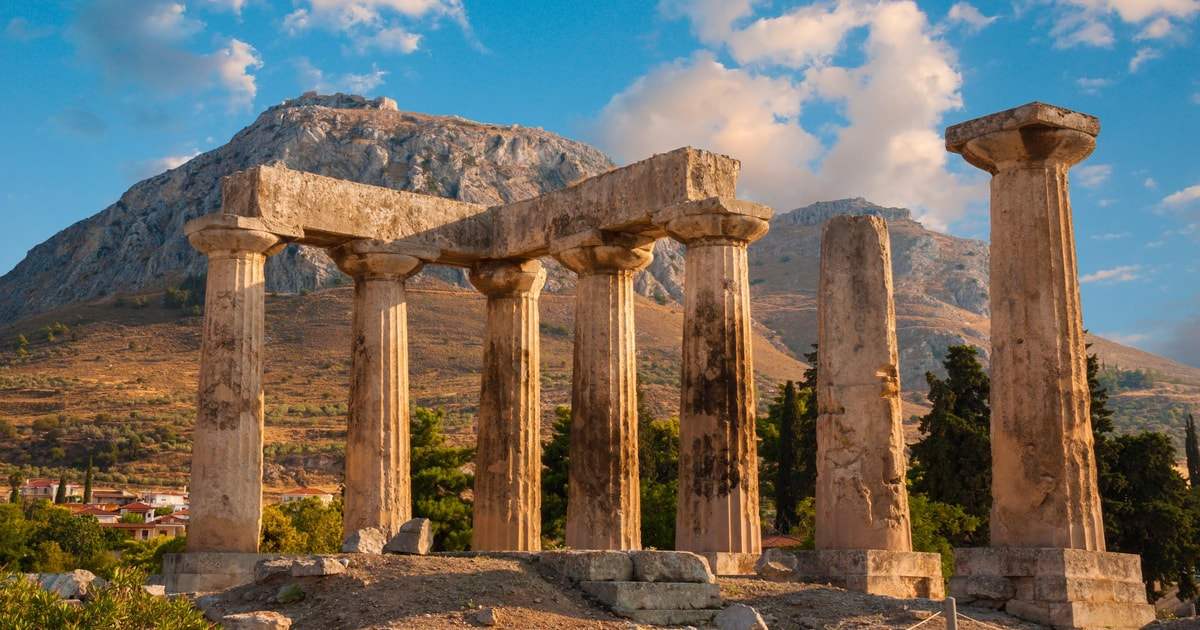
The Temple of Apollo stands on a rocky hill, and seven columns are preserved. Wikivoyage calls it one of the earliest Doric temples in Greece. One Apostle Paul Corinth tour page says you visit the temple.
Acrocorinth is a monolithic rock overlooking the ancient city. Three circuit walls defended the hill, and a temple to Aphrodite stood on its highest peak. The rock counts as one of the important medieval castle sites of Greece. Another Apostle Paul Corinth tour page says you enter Acrocorinth.
Under the Romans the Greek agora became a Roman forum. Peirene, a spring in Greek mythology, is physically located in Corinth. The remains also include an ancient theatre. A tour page says you walk the Agora, and another names the Erastus inscription.
What Is The Bema In Ancient Corinth?
The Bema is a monument of Ancient Corinth. The list of important monuments of the ancient city includes it. The entry gives two names: the Bema for the ancient monument, and the later Church of Apostle Paul.
According to Acts, the Jews of Corinth brought Paul before Gallio, the proconsul of Achaea. They accused him of violating Mosaic Law. Gallio refused to pass judgment and had Paul and the Jews removed from the court. Gallio was a Roman senator and the brother of the writer Seneca.
A picture caption names the Bema tribunal as the site of Paul’s hearing before Gallio. In one Apostle Paul Corinth tour listing, the Bema is where Paul is said to have stood trial. Other pages list the Bema as a stop, and one names the Step of Paul.
Treat the Bema as one stop on the walk through the ancient city. The stop list on your Apostle Paul Corinth tour page shows whether the Bema is on it. Check that line if the Bema is your reason to go.
What Are The Letters To The Corinthians?
The First and Second Epistles to the Corinthians are letters of the New Testament. They are attributed to the Apostle Paul and addressed to the Christian church in Corinth. The church is chiefly known through these two letters.
The First Epistle is a Pauline epistle, and its authorship is undisputed. It addresses issues in the Corinth congregation: divisions, marriage, food sacrificed to idols, worship and the resurrection of Jesus. The Ancient Corinth page says Paul wrote it from Ephesus. A majority of scholars doubt it is the first letter Paul wrote to the Corinthians.
The Second Epistle is attributed to the Apostle Paul and a co-author named Timothy. It is addressed to the church in Corinth and to Christians in the province of Achaea. It is shorter than the first epistle.
One listing for an Apostle Paul Corinth tour names the letters in its title. Another listing says you explore where Paul preached, taught and wrote his letters. That is the listings’ wording. If you want the context, read the letters before you go.
Does An Apostle Paul Corinth Tour Visit The Corinth Canal?
Five Paul listings name the Corinth Canal, so an Apostle Paul Corinth tour can include it. Those pages say you watch boats pass through it, cross it, see it or start the tour there. One other Paul listing does not name it.
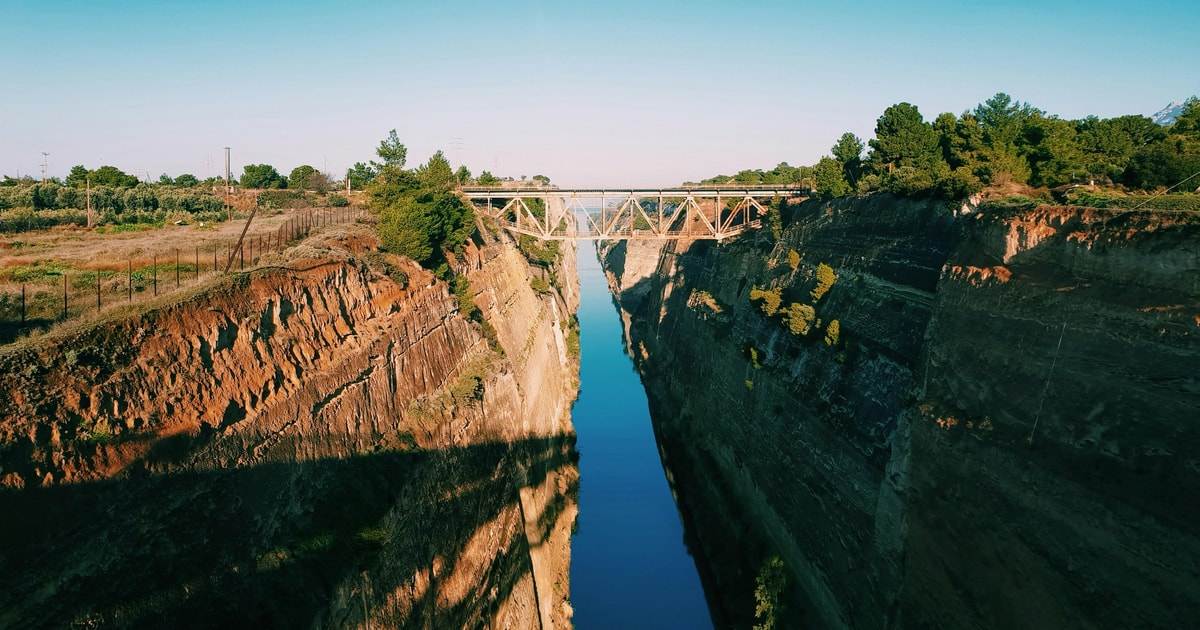
The Corinth Canal cuts through the narrow Isthmus of Corinth. It separates the Peloponnese from the Greek mainland and connects the Gulf of Corinth with the Saronic Gulf. The canal was dug at sea level and has no locks.
The canal is mainly a tourist attraction. Large vessels find it hard to navigate, so smaller recreational boats use it. Ships pass through one convoy at a time on a one-way system. Submersible bridges sit at both ends, and a railway line, a road and a motorway cross it.
Ships were moved between the two ancient harbours along the Diolkos. Remnants of the Diolkos still exist next to the modern canal. The idea of a canal came from the tyrant Periander, who built the Diolkos. One Apostle Paul Corinth tour listing names the Diolkos beside the canal.
Does An Apostle Paul Corinth Tour Include The Museum?
Yes, three listings add the museum to an Apostle Paul Corinth tour. One listing names Ancient Corinth and the museum together. Another is a site and museum tour led by an archaeologist. A third lists the museum with a local expert. The other Paul listings name the site only.
The Archaeological Museum of Ancient Corinth stands within the archaeological site. It was built to display finds from the excavations. Its extensive collection holds artefacts found in Ancient Corinth, and it arranges them in separate galleries.
The prehistoric gallery holds vases and cult figurines. In the classical gallery you see the twin Kouroi. The Roman gallery has sculptures, mosaics from Roman villas and a mosaic floor with the head of Dionysos. Finds in the atrium prove that a Jewish community lived in the Roman city.
One Athens listing for Ancient Corinth includes tickets. The letters tour and a biblical tour of Ancient Corinth carry the skip-the-line label on their pages. The sources link no museum object to Paul, so check the stop list if the museum matters.
Can You Book A Private Apostle Paul Corinth Tour?
Yes, you can book a private Apostle Paul Corinth tour, because ten listings carry the private group label. The label reads private group on each of those ten pages. Look for that exact label when you compare listings.
Beyond those ten, one Paul listing describes itself as a private or group tour. An Ancient Corinth listing with a beach stop carries a private option label. Neither page carries the private group label, so read each one for the group type it offers.
Food comes up in the private group listings as well. One offers a food option, which is a traditional Greek meal at a local restaurant. Another includes traditional local food in the private tour. Check what the meal covers on the page before you choose.
The small group label appears on listings that also carry the private group label and on listings that do not. A private tour is for your own party. Pick the Apostle Paul Corinth tour whose label matches the group you want.
What Does An Apostle Paul Corinth Tour Include?
Pickup is the first feature to check on an Apostle Paul Corinth tour. At least nine listings carry the pickup available label on their pages. Not every listing carries that label, so check for it before you plan your trip.
One listing adds an optional audio guide, so you decide whether to use it. That same listing also carries the skip the line label, which appears on at least five listings. Open each of those pages to see which entry the label covers.
Four listings show the wheelchair accessible label on their pages. Ask the provider what the label covers for your own needs. A label is a short note, not a full description. Get the answer before you book.
Each listing carries the free cancellation label, but the notice each page asks for differs. One page asks for a booking at least 8 hours ahead, and another asks for at least 4 hours. Choose a listing whose notice you can meet.
When Can You Take An Apostle Paul Corinth Tour?
The tour page shows the dates open for booking, and the weather changes with the season. Corinth has a hot-summer Mediterranean climate, with hot, dry summers and cool, rainy winters. July is the hottest month and January the coldest. Corinth receives about 463 mm of rain a year.
For Greece as a whole, Wikivoyage describes hot, dry summers with a long spell of near-constant sunshine. The midday sun gets very strong. In the warmest weeks, the meltemi winds from the north cool the country. The cold, rainy period starts in November and lasts until late March or early April.
Heatwaves at the coast tend to be quite mild, because the cooler sea moderates the temperature. The east of the Peloponnese is significantly drier than the west. Corinthia has hot summers and mild winters on the coast.
The sites lie outdoors, so pack for the season on an Apostle Paul Corinth tour. Bring water and a hat in summer and a rain layer in winter. Choose a date you can keep, and book that one.
How Do You Book An Apostle Paul Corinth Tour On GetYourGuide?
You book in four steps, and the first is choosing a type of tour. This page offers group day tours, private tours, car tours and short site tours. Pick one type, then open the page of that tour on GetYourGuide to start the booking.
On the tour page, read the length, the stops, the pickup label and the notice time. One day tour on this page asks you to book at least 8 hours ahead. Compare these four details with your plans before you move on.
Next, pick the date and the number of travellers in the booking form of the tour you opened first. Set both choices to match your plans for the day. Read them back once before you continue to the booking page.
Finish on the booking page, where you pay for the tour you chose. Your confirmation arrives once the booking is complete. Save the confirmation where you can find it again, and keep the date from step three in your own calendar.
Apostle Paul Corinth Tour: Questions And Answers
How long is an Apostle Paul Corinth tour?
The day tours on this page run from 5 to 8 hours. The short site tour takes 1 hour 30 minutes. Pick the tour that fits the hours you have free on your travel day. Confirm the exact figure on its page before you book.
Does an Apostle Paul Corinth tour start in Athens?
Yes. The listings on this page start in Athens and end in Corinth. One day tour runs from Areopagus Hill in Athens to Kechries and Ancient Corinth. Its page text describes the route as the path of Apostle Paul on a biblical day tour.
Does the tour stop at the Corinth Canal?
Five listings on this page name the Corinth Canal in their page text. One of them has you cross the canal, and another has you watch boats pass through it. Check the stop list of any other tour for the canal before you book.
Can you book a private Apostle Paul Corinth tour?
Yes, you can. Ten listings on this page carry the private group label. One of the private tours calls itself customizable in its page text. Compare it with a group day tour on this page, then pick the type that fits your party and day.
What is the Bema in Ancient Corinth?
The Bema is a monument of Ancient Corinth that later became the Church of Apostle Paul. According to Acts, Paul was brought before Gallio, proconsul of Achaea, in Corinth. One private tour on this page names the Bema and the Agora in its page text.